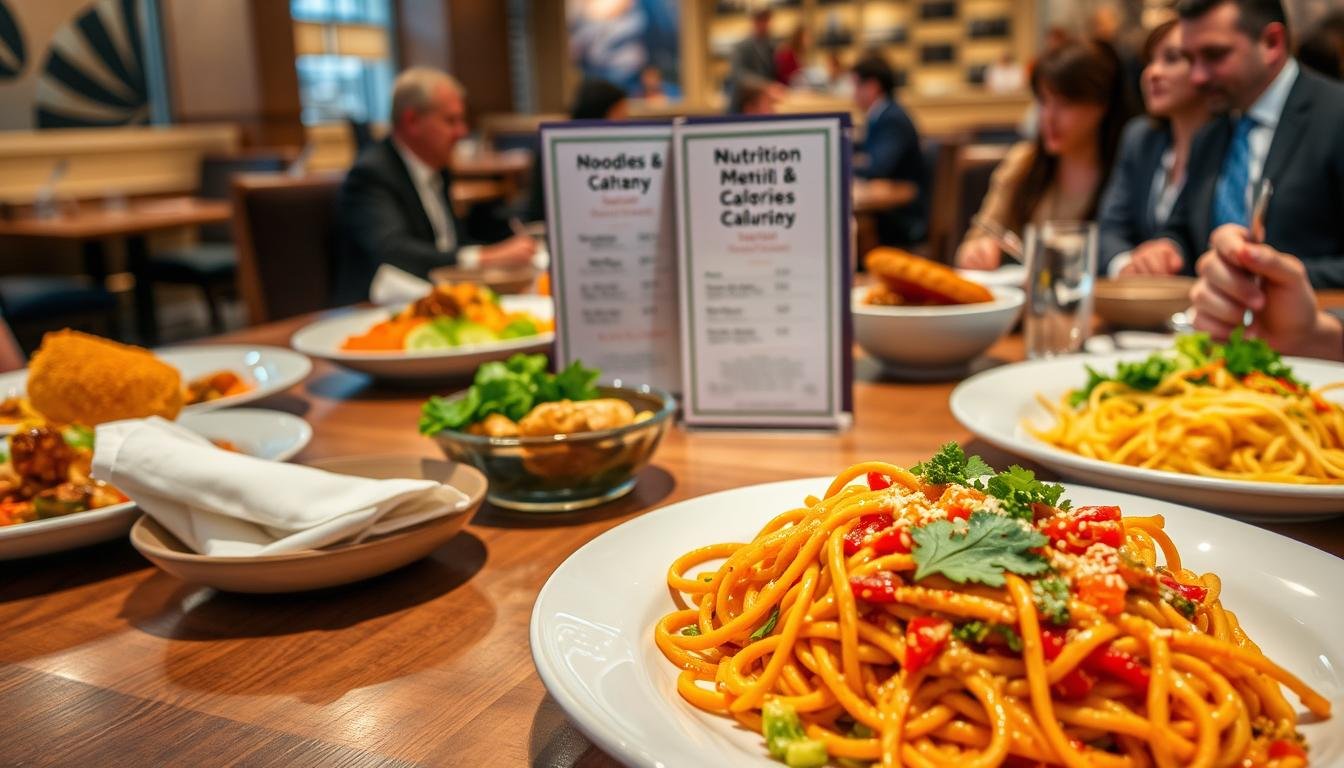
Noodles and Company Nutrition Menu: Calories, Prices, and More
The noodles and company nutrition menu is a quick guide to portion sizes, calories, and smart swaps for U.S. diners. In short: it lists calories per serving, common prices by location, and simple customization tips so you can plan your meal fast.
Start by checking size first, then toppings, then sides. Many regular bowls reach about 1,000 calories, while small portions and zucchini or cauliflower swaps cut calories and carbs sharply.
This guide covers calories first, then practical picks for lower-calorie, higher-protein, lower-carb, or comfort-food choices. It flags when saturated fat or sodium may matter more than calories—for heart health or blood pressure concerns.
What you’ll find here: clear item calories, price notes (varies by location), and dietary tags like vegan, keto, or gluten-free. Later tables list Item, Price (varies), Calories, Diet Options, and Allergens for fast scanning.
How to Use This Guide to Navigate Noodles Company Menu Nutrition
Pick a goal, then work backward: choose portion, swap, sauce, and protein to match calories and health priorities. “Per serving” tells you whether values apply to a small bowl, a regular bowl, or a side. Use that label first when reading calories or fat information.
Many items roughly double from small to regular. That pattern makes fast comparisons easy: halve a regular to estimate a small, or double a small to estimate a regular. Soups and salads can drop calories but still raise sodium.
- Pick a base (traditional or zucchini).
- Choose sauce type (creamy raises saturated fat; savory Asian styles raise sodium).
- Add protein (lean choices cut overall fat and calories).
| Action | What to check | Why it matters |
|---|---|---|
| Portion | Per serving calories | Controls total intake |
| Sauce | Fat / saturated fat | Impacts heart-health |
| Sodium | Salt levels | Important for blood pressure |
Use this as a decision tree: goal → portion → check calories → scan sat fat & sodium → tweak toppings. The rest of this guide is organized by category to help you scan the full noodles company menu facts quickly.
Portion Sizes Explained: Small, Regular, and Side Calories
Portion size is the fastest way to change a bowl’s calorie load. In fast-casual bowls, extra base, sauce, and add-ins stack quickly. That’s why many regular bowls reach about 1,000 calories.
The math is simple: a regular often doubles a small per serving. For example, Japanese Pan Noodles runs about 330 calories for a small and 660 for a regular. Wisconsin Mac & Cheese shows the same jump—small 490 calories, regular 980 calories. These clear swings show how portion drives totals.
How sides change the meal
Sides can push a lighter lunch into a heavy dinner. A side chicken noodle soup is 120 calories, while a small soup is 190 and a regular is 360.
| Item | Small | Regular |
|---|---|---|
| Japanese Pan Noodles | 330 cal | 660 cal |
| Wisconsin Mac & Cheese | 490 cal | 980 cal |
| Caesar Salad (side) | 80 cal | 300 cal (regular) |
- If you like small, halve a regular in your head to estimate calories.
- Try a small entrée plus a side salad for a filling, lighter combo.
- Watch dressings and creamy soups—they raise fat and saturated fat even when calories seem moderate.
This section sets up lighter starters and popular high-calorie entrées worth splitting in the next sections.
Best Starting Picks for Lighter Meals Under 500 Calories
Opt for a small salad or a cup of soup to keep things simple and filling. These fast wins let you eat out without overshooting your daily goals.
How to build an under-500 meal: start with a side salad or small soup, add lean chicken only if you need protein, and skip creamy dressings. Choose vinaigrette or the med dressing to save calories per serving.
Tossed Green Side Salad with Med Dressing — 30 calories
Tossed Green Side Salad with Balsamic Vinaigrette — 60 calories
Chicken Noodle Soup (small) — 190 calories
The Med Salad with Chicken (small) — 250 calories
Thai Chicken Salad (small) — 250 calories
Pairing tip: a small chicken noodle soup plus a tossed side salad gives volume and warmth while staying under 500 calories. The Med Salad with Chicken is a protein-forward but light choice that beats many entrée portions in total calories.
Note: Tomato Basil Bisque tastes rich but usually carries more calories than chicken noodle soup. Save it for when you’re not strictly under 500.
| Item | Price (varies) | Calories | Vegan/Keto/Gluten-Free | Allergens |
|---|---|---|---|---|
| Tossed Side Salad (Med) | $2.49 | 30 | Vegan: No / Keto: No / GF: Yes | None |
| Tossed Side Salad (Balsamic) | $2.49 | 60 | Vegan: Yes / Keto: No / GF: Yes | None |
| Chicken Noodle Soup (Small) | $3.99 | 190 | Vegan: No / Keto: No / GF: No | Wheat |
| The Med Salad (w/ Chicken, Small) | $6.49 | 250 | Vegan: No / Keto: Partial / GF: Yes | Dairy |
| Thai Chicken Salad (Small) | $6.99 | 250 | Vegan: No / Keto: Partial / GF: Ask | Peanuts |
Most Popular High-Calorie Entrées to Split or Size Down
Fans love bold, rich bowls, but portion choices decide whether a favorite fits your day. These bestsellers deliver big flavor — and large counts of calories, fat, and saturated fat when ordered as a regular.
Why they run high: creamy sauces, melted cheese, and rich toppings add concentrated fat and saturated fat. Some sauces also raise sodium totals, which matters if you track salt.
- Playbook: order a small, split a regular, or box half before you dig in.
- Share with a friend, pair the entrée with a side salad instead of bread, and skip dessert when the main is indulgent.
- Make mac dishes a side portion to enjoy flavor without the full-calorie hit.
| Item | Price (varies) | Calories | Dietary Notes / Allergens |
|---|---|---|---|
| Alfredo MontAmore (regular) | $9.99 | 1,410 | Very high saturated fat & sodium; contains dairy, wheat |
| Spicy Korean Beef Noodles (regular) | $9.49 | 1,000 | Bold flavor; add veggies to reduce per-bite calories; contains beef, soy, wheat |
| Pad Thai (regular) | $9.79 | 1,240 | High calories from sauce & peanuts; can be smaller portion with extra veg; contains peanuts, egg, wheat |
| Buffalo Chicken Mac (regular) | $9.59 | 1,100 | High sodium; rich cheese and sauce; contains dairy, wheat, chicken |
| BBQ Pork Mac (regular) | $9.69 | 1,210 | Smoky flavor but high calories; contains pork, dairy, wheat |
noodles and company nutrition menu: What to Order by Goal
Decide what you want to achieve—lighter, higher-protein, lower-carb, or comfort—then order to match it. This quick map helps you pick portion, base, and protein in under a minute.
For lower-calorie meals without skipping carbs
Pick a small portion, choose a classic wheat base, or swap to a side salad for extra volume. Small bowls keep calories down while preserving familiar textures.
For higher-protein choices
Compare add-ons per serving: grilled chicken 150 cal; parmesan-crusted chicken 190 cal; shrimp 70 cal; seasoned tofu 210 cal; marinated steak 120 cal. Choose lean shrimp or grilled chicken to boost protein with fewer calories.
For lower-carb swaps
Zucchini noodles work as a direct base swap (small 30 cal, regular 60 cal). You keep sauces, toppings, and flavor while cutting carbs sharply.
For comfort cravings with smarter portions
Order a small entrée, add a side mac to share, or split a regular bowl. Watch list: creamy sauces raise saturated fat; bold sauces raise sodium. Next sections list dish-style calorie ranges so you can plan precisely.
| Item | Calories | Notes |
|---|---|---|
| Zucchini noodles (small) | 30 | Lower-carb base |
| Grilled chicken add-on | 150 | Lean protein |
| Sautéed shrimp add-on | 70 | Low-calorie protein |
Classic Noodles and Pan Noodles: Calories You Can Expect
When you pick a classic bowl, you’re choosing familiar pasta shapes dressed in simple, craveable sauces.
Classic items mean basic pasta shapes, mild sauces, and comfort-forward flavor. These builds are easy to size: small vs regular shows the common doubling pattern per serving.
Japanese Pan Noodles
Small: 330 calories. Regular: 660 calories. Use japanese pan as the quick reference for portion math—small-to-regular often doubles.
Buttered Noodles
Small: 380 calories. Regular: 760 calories. Buttered noodles are simple and craveable. The rich base makes calories climb fast from small to regular.
Spaghetti
Small: 310 calories. Regular: 620 calories. Spaghetti is one of the lighter classic bases per serving. Toppings and sides can raise totals quickly, so watch add-ons.
- Ordering tip: pair a small classic bowl with a tossed green side salad for crunch and volume.
- Emphasize small vs regular when you order to control calories per serving.
| Item | Price (varies) | Calories (Small / Regular) | Vegan / Keto / Gluten-Free | Allergens |
|---|---|---|---|---|
| Japanese Pan Noodles | $8.49 | 330 / 660 | Vegan: No / Keto: No / GF: No | Soy, Wheat |
| Buttered Noodles | $7.29 | 380 / 760 | Vegan: No / Keto: No / GF: No | Dairy, Wheat |
| Spaghetti | $7.49 | 310 / 620 | Vegan: Yes (hold cheese) / Keto: No / GF: Ask | Wheat, Egg (if added) |
Asian-Inspired Favorites: Pad Thai and Spicy Korean Beef
Asian-style bowls bring bold sauces that change the calorie story fast. These plates use sweet, savory, and spicy sauces that raise both calories and sodium, so portion choice matters.
Quick comparisons: Pad Thai runs 620 calories small and 1,240 regular — a regular can easily become a split meal if you add an appetizer or dessert.
Spicy Korean beef noodles deliver a savory, hearty bowl at 560 calories small and 1,000 regular. The zucchini spicy korean beef option keeps the flavor while cutting to 320 small and 520 regular per serving.
- Add extra veggies to boost volume without many extra calories.
- Choose grilled chicken or shrimp for lean protein if you want less rich topping.
- Fast compare tip: if you wonder whether to pick classic pasta or zoodles, ask how hungry you’ll be in two hours.
| Item | Calories | Vegan/Keto/Gluten-Free | Allergens |
|---|---|---|---|
| Pad Thai (small / regular) | 620 / 1,240 | Vegan: No / Keto: No / GF: Ask | Peanuts, Egg, Wheat |
| Spicy Korean Beef Noodles (small / regular) | 560 / 1,000 | Vegan: No / Keto: No / GF: Ask | Soy, Wheat |
| Zucchini Spicy Korean Beef (small / regular) | 320 / 520 | Vegan: No / Keto: Lower-carb / GF: Ask | Soy, Wheat |
Mac & Cheese Nutrition: Wisconsin, Truffle, BBQ Pork, Buffalo Chicken
Creamy mac bowls feel indulgent; choosing the right size keeps that comfort from becoming a calorie overload.
Use the Wisconsin mac as the baseline. A small is 490 calories, a regular 980 calories, while a side runs 270 calories. Toppings change the totals quickly.
Truffle, BBQ pork, and Buffalo variations
Truffle mac clocks about 530 small and 1,070 regular. BBQ pork jumps to roughly 690 small and 1,210 regular. Buffalo chicken lands near 650 small and 1,100 regular with very high sodium flagged for the spicy option.
| Item | Calories | Vegan/Keto/GF |
|---|---|---|
| Wisconsin Mac (Small / Regular) | 490 / 980 | No / No / Ask |
| Wisconsin Mac (Side) | 270 | No / No / Ask |
| Truffle Mac (Small / Regular) | 530 / 1,070 | No / No / Ask |
| BBQ Pork Mac (Small / Regular) | 690 / 1,210 | No / No / Ask |
| Buffalo Chicken Mac (Small / Regular) | 650 / 1,100 | No / No / Ask |
- Smart comfort: choose a small, split a regular, or order a side mac plus a tossed side for balance.
- Cheesy bowls are higher in saturated fat; pair with a light salad and water to offset fat and sodium.
Pasta Bowls and Creamy Sauces: Penne Rosa, Pesto Cavatappi, Alfredo
Sauce choice often drives the biggest jump in calories and fat more than the pasta shape. Pick a tomato or herb sauce to keep totals moderate. Choose creamy sauces only when you plan to share or box half.
Penne Rosa is a moderate option: small 360 calories, regular 720 calories. Pesto Cavatappi with Parmesan reads slightly higher at 380 small and 750 regular, but it often feels more balanced on the plate.
Pasta Fresca sits in the middle—small 440 calories and regular 880 calories—lighter than heavy creams but still filling.
Know-before-you-order: Alfredo MontAmore is rich. Small 800 calories; regular 1,410 calories. It is very high in saturated fat and sodium, especially with parmesan-crusted chicken.
- Order small, add extra veggies.
- Choose grilled chicken over parmesan-crusted for less fat.
- Skip bread with Alfredo to limit calories.
| Item | Calories (Small / Regular) | Suggested Add-On Swap |
|---|---|---|
| Penne Rosa | 360 / 720 | Grilled chicken (lean) vs parm-crusted (richer) |
| Pesto Cavatappi w/ Parmesan | 380 / 750 | Extra veg to boost volume |
| Pasta Fresca | 440 / 880 | Shrimp for lower fat protein |
| Alfredo MontAmore | 800 / 1,410 | Small + grilled chicken, box half |
Curries and Coconut-Based Bowls: Thai Green Curry Options
Aromatic, creamy coconut broth gives curry bowls a warm, satisfying mouthfeel. Vegetables, herbs, and a touch of spice add texture while the sauce holds flavors together.
The calorie ladder below shows how portion size and a shrimp add-on change totals. A small Thai Green Curry is moderate; a regular is hearty. Adding shrimp raises calories modestly while boosting protein.
Thai Green Curry
Small: 380 calories per serving. Regular: 780 calories per serving.
Thai Green Curry with Shrimp
Small: 460 calories per serving. Regular: 840 calories per serving.
Zucchini Thai Green Curry with Shrimp
Small: 260 calories per serving. Regular: 440 calories per serving.
Protein-smart note: sautéed shrimp is a lean add-on (70 calories) that increases satiety without a large fat increase. You can also order shrimp separately to control portion size.
Ordering shortcut: if you want full curry flavor with fewer calories, pick the zucchini base with shrimp. Regular curries still work well for dinner—just pair with light sides and skip dessert if you’re watching totals.
| Item | Price (varies) | Calories | Vegan / Keto / GF | Allergens |
|---|---|---|---|---|
| Thai Green Curry (Small / Regular) | $9.29 | 380 / 780 | Vegan: Ask / Keto: No / GF: Ask | Coconut, Fish Sauce (may contain) |
| Thai Green Curry w/ Shrimp (Small / Regular) | $10.49 | 460 / 840 | Vegan: No / Keto: No / GF: Ask | Shellfish, Coconut |
| Zucchini Thai Green Curry w/ Shrimp (Small / Regular) | $10.79 | 260 / 440 | Vegan: No / Keto: Lower-carb / GF: Ask | Shellfish, Coconut |
Salads That Actually Fill You Up: Med Salad, Caesar, Thai Chicken
Salads at Noodles & Company can feel like a full meal when built with protein and crisp greens. These options give crunch, clear calories, and easy swaps so you can pick light or protein-forward without guessing.
The Med Salad
The Med Salad is a lighter option: small 140 calories, regular 280 calories per serving. It works as a side salad or a base for extras.
The Med Salad w/ Chicken
Add chicken for a protein bump: small 250 calories, regular 390 calories. This med salad chicken choice moves it from side-style to main-course fuel.
Caesar Options
Caesar is flexible: side 80 calories, small 150 calories, regular 300 calories. Choose the Grilled Chicken Caesar for more staying power (small 260, regular 410).
Thai Chicken Salad
Thai Chicken hits a savory balance: small 250 calories, regular 370 calories. It’s a good pick when you want bold flavor without a pasta entrée.
- Dressing note: creamy dressings raise fat quickly; ask for dressing on the side to control portions.
- Pairing ideas: small salad + baguette for a tuned carb add-on, or salad + small soup for warmth and balance.
| Item | Portion | Calories | Vegan/Keto/GF |
|---|---|---|---|
| The Med Salad | Small / Regular | 140 / 280 | Vegan: Ask / Keto: No / GF: Ask |
| The Med Salad w/ Chicken | Small / Regular | 250 / 390 | Vegan: No / Keto: Partial / GF: Ask |
| Caesar Salad | Side / Small / Regular | 80 / 150 / 300 | Vegan: No / Keto: No / GF: Ask |
| Grilled Chicken Caesar | Small / Regular | 260 / 410 | Vegan: No / Keto: Partial / GF: Ask |
| Thai Chicken Salad | Small / Regular | 250 / 370 | Vegan: No / Keto: Partial / GF: Ask |
Think>
1. Five first-sentence variations (unique, avoid listed repeats):
– Warm, brothy choices can turn a quick order into a cozy, satisfying meal.
– A small cup of soup often delivers comfort without blowing your daily totals.
– Soups make flexible meal partners—light when paired with salad, hearty when paired with a small entrée.
– Choosing the right cup can keep dinner simple while still feeling indulgent.
– A soup-first approach helps you control calories while staying warm and full.
Chosen sentence: “Soups make flexible meal partners—light when paired with salad, hearty when paired with a small entrée.”
Why: It emphasizes pairing and flexibility, fits the brand’s helpful tone, and avoids similarity to prohibited lines.
2. Use current_section data: include calorie facts for chicken noodle soup and tomato basil bisque, sodium note (2,320mg for regular), higher sugar and fat for bisque, portion-first theme, combo suggestions, cozy vs creamy descriptions, and a comparative table.
3. Brand voice: friendly professional, authoritative, third-person with “you”, concise sentences, appetizing descriptors.
4. Formatting: use
Soups and Bisque: Chicken Noodle Soup vs Tomato Basil Bisque
, ,
- , , ,
| , |
|---|
| as required. Insert the provided centered image tag with alt containing section keyword. 5. Final HTML content below. 6. Keyword placement matrix: ensure each primary keyword repeats no more than allowed by (Total Words/100)*2. Total target words 165 (mid-range). Max repeats per keyword ≈ (165/100)*2 = 3.3 → cap 3. Must also not use “noodles”, “and”, “company”, “nutrition”, “menu” more than twice. I’ll use “noodles” and “company” at most twice combined. Use keywords mainly: chicken noodle soup, basil bisque, bisque, basil, calories, per serving, company menu sparingly. Aim to include chicken noodle soup 3 times, basil bisque 3 times, bisque 2 times, basil 2 times, company menu 1, calories many but cap 3. Managed in matrix below. 7. Short paragraphs: 3-4 sentences max each, simple words. Aim Flesch 60-70. 8. No webInfo extra use needed. |
Soups and Bisque: Chicken Noodle Soup vs Tomato Basil Bisque
| Soups make flexible meal partners—light when paired with salad, hearty when paired with a small entrée. A cup can warm you up and still leave room for a side or a small bowl. Portion-first thinking helps you pick the right size for your day. |
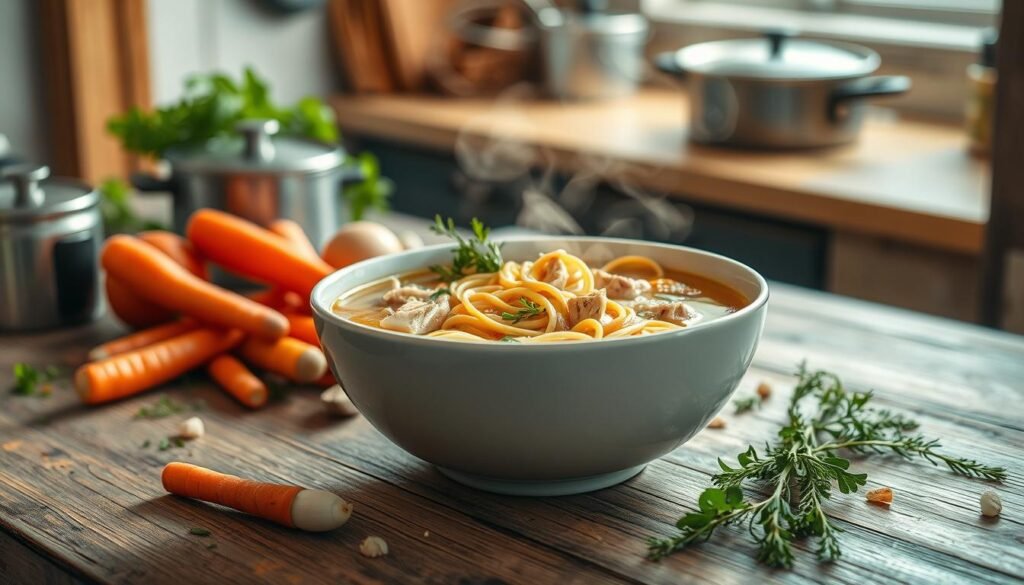
| The classic chicken noodle soup comes in three sizes: side 120 calories, small 190 calories, regular 360 calories per serving. It delivers cozy, savory flavor but watch sodium—one regular serving can reach about 2,320 mg. That matters if you track salt for blood pressure or heart health. | The tomato basil bisque is creamier and richer. Side 140 calories, small 290 calories, regular 430 calories per serving. It also has more fat and sugar than the chicken option, so a side cup is a smart way to enjoy bisque without a heavy meal. |
- When to pick soup: choose chicken noodle soup for lighter, broth-forward warmth.
- Pick bisque: when you want creamy, tomato-forward comfort but plan a smaller portion elsewhere.
- Sodium note: balance a salty soup with a low-sodium salad or plain zucchini base later in the meal.
| Item | Side | Small | Regular | Best for |
|---|---|---|---|---|
| Chicken Noodle Soup | 120 cal | 190 cal | 360 cal | Lighter, brothy choice |
| Tomato Basil Bisque | 140 cal | 290 cal | 430 cal | Creamy, richer option |
| Combo ideas: side soup plus a small salad makes a filling lunch. Or choose a small soup with a small classic bowl for a heartier dinner while keeping calories and fat balanced. |
Sides and Shareables: Potstickers, Bread, Side Salad Calories
Small shareables add flavor but can raise calories fast. Choose a lighter side when you order a small entrée. Split heavier items with a friend to keep totals in check.
Quick comparisons: three potstickers with dipping sauce are 220 calories. Cheesy garlic bread with marinara runs about 350 calories. A plain baguette is roughly 160 calories.
Side salads vary by dressing: Med 30 calories, Balsamic 60, Caesar 90, Jalapeño Ranch 110. Pick Med or balsamic to keep fat and calories low.
- Split potstickers to save calories while tasting a shareable.
- Choose baguette if you want bread but less fat than cheesy garlic bread.
- Ask for dressing on the side to control portions.
- Note allergens: bread has wheat; cheesy bread has dairy; potsticker sauce may contain soy.
| Item | Price (varies) | Calories | Vegan / Keto / GF | Allergens |
|---|---|---|---|---|
| Potstickers (3) w/ Sauce | $4.29 | 220 | No / No / No | Wheat, Soy |
| Cheesy Garlic Bread w/ Marinara | $3.99 | 350 | No / No / No | Dairy, Wheat |
| Baguette (single) | $1.99 | 160 | Yes (no toppings) / No / No | Wheat |
| Tossed Side Salad (by dressing) | $2.49 | Med 30 / Balsamic 60 / Caesar 90 / Jalapeño Ranch 110 | Ask / No / Ask | Depends on dressing |
Ordering tip: the best balanced meal is often a small entrée plus a light side, not a regular entrée plus a heavy side and dessert.
Add-Ons and Protein Boosters: Chicken, Steak, Shrimp, Tofu
Add-ons are the fastest way to tune a bowl for more protein without changing its core flavor. You can raise satiety and keep calories in check by choosing lean options. This makes it easy to adapt a favorite dish to your goals.
Grilled vs Parmesan-Crusted Chicken
Grilled chicken breast adds about 150 calories per serving. It is lean and low in added fat.
Parmesan-crusted chicken is richer at roughly 190 calories per serving. It boosts flavor but raises saturated fat.
Shrimp, Tofu, Steak, and Other Boosts
Sautéed shrimp is the lightest protein at about 70 calories per serving. It works well in curries and Asian bowls.
Seasoned tofu runs near 210 calories per serving and fits veggie-forward builds. It may contain soy allergens.
Marinated steak adds roughly 120 calories per serving and pairs well with spicy beef-style bowls. Naturally raised pork is about 160 calories; bacon adds ~90 calories.
- Quick rule: for a small bowl, choose lean protein to raise fullness before adding bread or dessert.
- Add-ons change calories more than base swaps do—pick by satiety needs.
| Item | Calories | Best for | Allergens / Notes |
|---|---|---|---|
| Grilled Chicken Breast | 150 cal | Lean protein, salads & brothy bowls | Gluten-free (ask) |
| Parmesan-Crusted Chicken | 190 cal | Richer, cheesy topping | Dairy |
| Sautéed Shrimp | 70 cal | Low-calorie protein for curries & Asian bowls | Shellfish |
| Seasoned Tofu | 210 cal | Plant-based protein for veggie builds | Soy |
| Marinated Steak | 120 cal | Flavorful beef add-on for spicy bowls | Beef |
Tip: adding a lean protein like grilled chicken or shrimp boosts protein per serving without the fat spike that comes from richer toppings.
Desserts and Treats: Cookies and Rice Crispy Calories
Desserts here are true treats—expect concentrated calories and rich textures. These sweets work best when you plan to enjoy a dessert, not as a casual add-on. Knowing per-serving counts helps you decide if a treat fits today’s plan.
The Chocolate Chunk Cookie clocks about 490 calories per serving. The Snoodledoodle Cookie is close at 480 calories. The Rice Crispy bar runs highest at roughly 540 calories.
All three are high-calorie options by design. Taste should guide your pick since calories are similar across the trio. Splitting or saving half gives you the flavor without the full calorie load.
- Smart choices: split a cookie with a friend or box half for later.
- Skip when: you already ordered a regular mac, Alfredo, or another large entrée.
- Enjoyment matters: pick one when a true treat is the goal, then balance portions elsewhere.
| Item | Price (varies) | Calories | Vegan/Keto/GF | Allergens |
|---|---|---|---|---|
| Chocolate Chunk Cookie | $2.79 | 490 | No / No / No | Wheat, Dairy, Eggs |
| Snoodledoodle Cookie | $2.69 | 480 | No / No / No | Wheat, Dairy, Eggs |
| Rice Crispy Treat | $2.99 | 540 | No / No / No | Dairy (may contain), Wheat (gluten in ingredients may vary) |
Quick tip: treat a dessert as a planned choice. When you know the calories, you can enjoy a sweet without losing control of the rest of your meal.
How to Customize Your Bowl for Dietary Preferences in the US
Tuning a bowl to your diet is easy when you follow a short checklist at the register. Start by choosing a size, then pick a base, sauce, protein, and finish with toppings. These steps help you hit targets for carbs, fat, and calories per serving.
Low-carb strategy
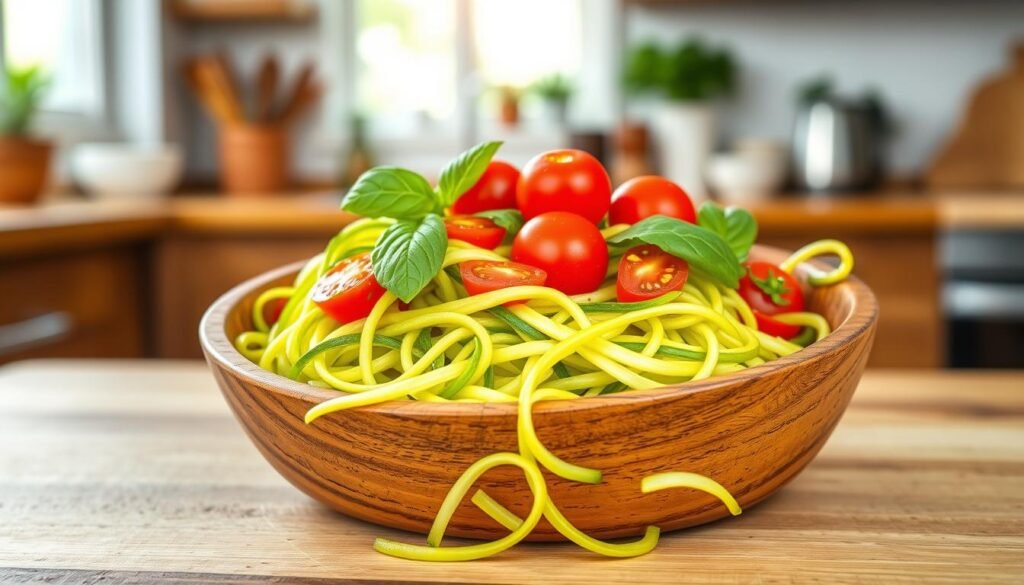
Swap to zucchini noodles to cut carbs fast—small 30 calories, regular 60 calories. Zucchini versions of spicy Korean beef (320 small / 520 regular) or Thai green curry w/ shrimp (260 small / 440 regular) keep flavor with fewer carbs.
Gluten-sensitive approach
Availability varies by location, but ask about alternative noodle types and the interactive allergen chart. When in doubt, choose a zucchini base or a salad to reduce gluten risk.
Vegetarian, vegan, diabetes-friendly, and low-fat tips
Hold cheese and cream to make bowls vegan-friendly; pick tofu or extra veggies for protein. For diabetes-friendly meals, use portion control + protein + vegetables. To lower fat, favor grilled chicken or shrimp over creamy mac or Alfredo.
- Quick checklist: size → base → sauce → protein → toppings.
| Lever | Quick impact | Allergens / Notes |
|---|---|---|
| Zucchini noodles | Very low calories | Vegetable base |
| Grilled chicken | ~150 cal, lean protein | Gluten-free (ask) |
| Sautéed shrimp | ~70 cal, low fat | Shellfish |
| Seasoned tofu | ~210 cal, plant protein | Soy |
| Dressing on side | Control fat and calories | Varies by dressing |
Final tip: tell the cashier or app your swaps upfront. A single sentence—size, zoodle, grilled protein—yields a bowl that fits your plan.
Conclusion
Wrap up with a quick checklist to make smarter choices at the counter. Pick your goal, choose small vs regular, then add lean protein and extra veggies to match calories per serving.
Portion drives the largest change — many regular bowls approach 1,000 calories. Swap to zucchini (zoodles) or pick grilled chicken or shrimp to cut totals without losing flavor.
Watch saturated fat and sodium in creamy or heavily sauced bowls. Use a side salad or a small soup to round out a meal without ordering a larger entrée.
Finally, check current prices in the app or in-store, then use these per-serving ranges to plan your next Noodles Company visit with confidence.